
Foot Fungus 101: What Causes It and How to Stop It
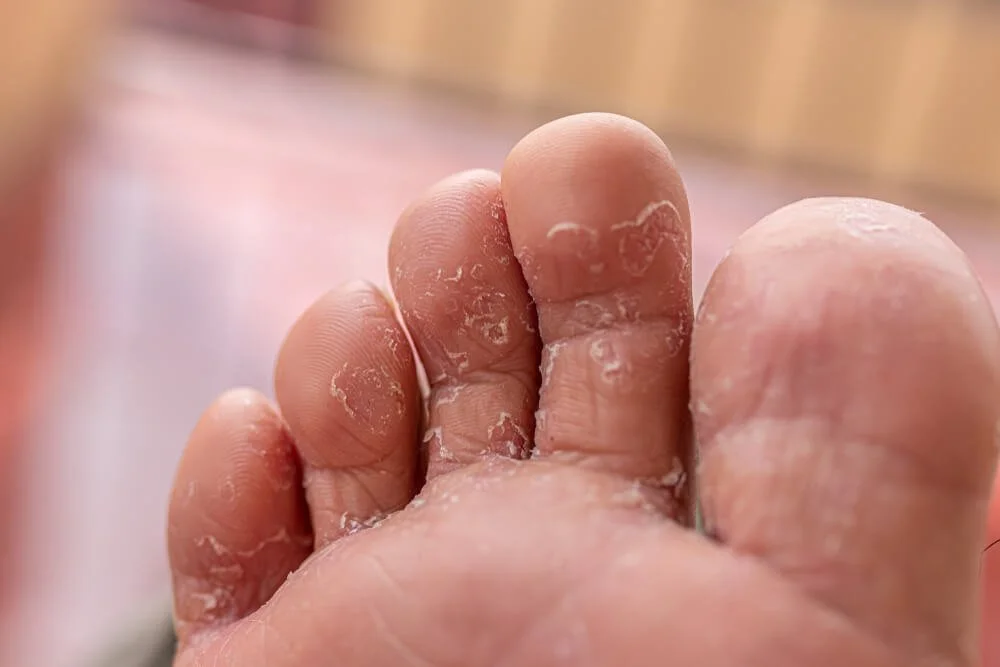
Athlete’s foot (foot fungus) is one of the most frequent skin conditions affecting the feet. While often dismissed as a minor irritation, untreated fungal infections can linger, spread, and significantly impact skin health.
What Is Foot Fungus?
Athlete’s foot is a fungal skin infection caused by dermatophytes, microorganisms that thrive in warm, moist environments. The infection most often appears between the toes but can also affect the soles and sides of the feet.
Common foot fungus symptoms include:
Itching
Burning
Redness
Peeling or cracking skin
Painful fissures or blistering may develop in advanced cases
The fungus responsible for athlete’s foot may survive on floors, towels, socks, and inside shoes for extended periods. This explains why the infection spreads easily in locker rooms, public showers, gyms, and pool areas.
How does athlete’s foot begin
Foot fungus typically starts when skin is exposed to moisture for prolonged periods. Sweaty socks, tight shoes, and synthetic footwear materials create an ideal environment for fungal growth. Small breaks in the skin are often caused by dryness or friction which allows the fungus to penetrate the outer layer of skin.
Once foot fungus develops it can spread quickly across the foot or even to other areas of the body if left untreated. Scratching the affected area and then touching other skin surfaces increases the risk of foot fungus spreading.
Why foot fungus Often Returns
One of the most troubling aspects of foot fungus is recurrence. Over-the-counter antifungal products may relieve symptoms, but inconsistent use or stopping treatment too early may allow fungal organisms to survive. In addition, not changing daily habits or failing to disinfect shoes often leads to reinfection.
It is important to treating both the skin and the surrounding environment to fully resolve foot fungus.
treatment of foot fungus
Mild cases of athlete’s foot may respond to prescription-strength topical antifungal medications applied for the full recommended duration. More persistent or widespread infections may require oral antifungal therapy. A podiatrist can accurately diagnose the infection and rule out other skin conditions that mimic fungal symptoms, such as eczema or psoriasis.
Five Tips for Preventing Foot Fungus
Prevention plays a key role in maintaining healthy skin:
Wash feet daily and dry thoroughly, especially between toes
Change socks daily or more often if feet sweat
Rotate shoes and allow them to dry completely
Wear sandals in public showers and locker rooms
Avoid sharing towels, socks, or shoes
When to See our Podiatrists
If athlete’s foot does not improve, keeps returning, or causes cracking and pain, professional evaluation is recommended. Early treatment helps prevent spread and supports long-term skin health, keeping your feet comfortable and fungus-free.
Expert Podiatric Care in Valley Stream, NY
Experiencing foot fungus infection? Valley Stream Podiatry can help you with all your foot and ankle issues. . Dr. Andrew Shapiro, Dr. Michael Barkin and Dr. Sajni Shah , Podiatrists and Foot Surgeons, specialize in diagnosing and treating foot related skin conditions.
Schedule Your Comprehensive Foot Examination
Valley Stream Podiatry
Valley Stream, NY
Call 516) 825-3860 or Request an Appointment